The 20-yard dumpster is the mid-size container for whole-room and multi-room jobs The 20-yard dumpster holds about 8 pickup-truck loads, which places it between the 15-yard ($650) and the 30-yard ($795). It suits a…
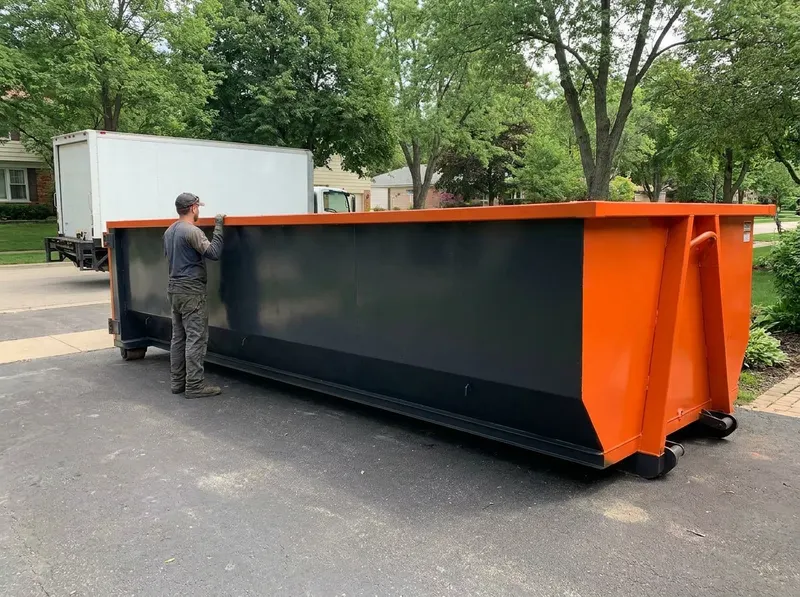
The 20-yard dumpster holds about 8 pickup-truck loads, which places it between the 15-yard ($650) and the 30-yard ($795). It suits a kitchen-and-bath remodel in a Logan Square two-flat, a basement cleanout in Beverly, or a garage tear-out in Portage Park. A single-room cleanout fits a 10-yard ($595); a full roof tear-off or a whole-house gut leans toward the 30-yard or 40-yard ($895), the trade-off is driveway footprint versus how many trips you avoid.
The 20-yard body sits around 4.5 feet tall, low enough to toss drywall and flooring over the wall without a ramp. Step 1, call or text the job. Step 2, confirm the drop spot and date.
Step 3, we deliver the container. Step 4, you load it over the rental window. Step 5, we haul it and dispose of the contents.
The $695 covers the container, delivery, pickup, and disposal at a permitted transfer facility, there is no weight charge waiting at the end.
Many national booking portals advertise a low base and then bill overage by the ton; the crucial non-obvious fact is that an all-in flat price removes that tonnage math entirely. Heavy loads of concrete, dirt, brick, or roofing shingles are the common exception across the industry because weight-restricted debris changes how a container is hauled, so mention those materials when you call and the recommendation gets adjusted up front. The EPA guidance on construction and demolition materials explains why concrete and shingle loads are handled separately from mixed household debris.
A 20-yard container needs roughly 22 feet of straight clearance plus room for the truck to lift and set it down.
In Pilsen, Bridgeport, and Avondale, the rear alley is often the cleanest drop point and keeps the front curb open. On a tight Lincoln Park or Edgewater lot, the container rides on the driveway, and plywood boards go under the wheels and rails to protect the slab. Placing a dumpster on a Chicago public street or parkway generally requires a permit from the city; residential driveway and private-lot placement does not.
The Chicago Department of Transportation administers public-way use, and Cook County rules can apply on certain boundary stretches. Confirm the placement plan when booking so the right-of-way question is settled before the truck rolls.
The 20-yard takes mixed renovation and cleanout debris: lumber, cabinets, drywall, subfloor, carpet, furniture, appliances with the doors removed, and general trash. A dumpster rental is not junk removal, the container is dropped and you load it, which keeps the price lower than a full-service haul-away.
Several materials are banned from the container because they cannot go to a standard transfer station: wet paint, motor oil, tires, car batteries, and anything the household hazardous waste program covers. Electronics and appliances follow electronics recycling and refrigerant rules. On a jobsite, keep the walking path and load zone clear per OSHA 1926 construction standards.
For leftover usable materials, Earth911 lists local reuse and recycling drop-offs, and the Chicago Department of Streets and Sanitation publishes municipal disposal guidance. Industry container dimensions follow the categories the National Waste and Recycling Association describes.
Every job gets a firm, written price after an on-site visit.
Tell us about your 20-yard dumpster job in Chicago and we'll send a clear, written quote, usually the same day.
 Boxcar Dumpster Rental